Pubblicazioni

scientifiche

  • Categorie

Recent Advances on Distributed Unsupervised Learning
Distributed clustering enables intelligent, resilient data analysis across sensor networks without centralized supervision.
A. Rosato, R. Altilio, M. Panella
Leggi il paper

Recent Advances on Distributed Unsupervised Learning

A. Rosato, R. Altilio, M. Panella
A New Paradigm for Learning from Distributed Data
In today’s interconnected world, where sensors, devices, and intelligent agents constantly communicate with each other, the need to learn directly from distributed data has become central. It’s no longer about collecting all the information on a single server for processing, but rather about empowering each node in the network to learn and collaborate locally. This is where a new class of unsupervised distributed learning algorithms comes into play, opening up real-world applications in fields like environmental monitoring, industrial diagnostics, smart cities, and cooperative robotics.
Local Intelligence, Global Insight
These techniques are built on the idea that each node or agent holds only a portion of the global dataset, and that through limited, intelligent interactions with neighboring nodes, it’s possible to reconstruct a global understanding. The challenge is not just to learn, but to do so efficiently, resiliently, and without overloading the network with unnecessary communication. The proposed solutions, drawing on Gaussian models, K-Means, density-based methods, and fuzzy logic, demonstrate that even with limited resources and no central supervision, it’s possible to achieve accurate and adaptable clustering in practical contexts.
Real-World Scenarios: Forests, Factories, and Autonomous Agents
Imagine, for instance, a network of sensors in a forest tasked with detecting fires or abnormal temperature changes: instead of continuously sending all data to a central station, the sensors analyze their own readings locally, share summaries with neighbors, and collectively converge on a map of critical zones. Again, picture a fleet of robots in an industrial environment needing to identify areas of activity: they can autonomously collaborate, update each other in real time, and make collective decisions without relying on a central server.
Resilient and Scalable AI Architectures
These techniques not only reduce computational costs and energy consumption but also increase resilience in case of failures, making the entire system more robust. The most promising evolution lies in models that combine distributed learning, agent consensus, and ensemble methods, capable of dynamically adapting to the structure and complexity of the data. It’s within these intelligent architectures, where every node matters and contributes, that the future of distributed AI is taking shape.
Embedding of time series for the prediction in photovoltaic power plants
AI models forecast solar power output with high accuracy using time series embedding from real photovoltaic plant data.
A. Rosato, R. Altilio, R. Araneo, M. Panella
Leggi il paper

Embedding of time series for the prediction in photovoltaic power plants

A. Rosato, R. Altilio, R. Araneo, M. Panella
The Challenge of Solar Energy Forecasting
The energy produced by photovoltaic systems is valuable, but also unpredictable. Its variability, driven by weather conditions and natural cycles, poses a daily challenge for grid operators. How can we make reliable forecasts to optimize energy distribution? The answer lies in three advanced approaches that combine neural networks, fuzzy logic, and nonlinear modeling.
Embedding: A Smart Representation of Time Series
At the core of the method is a technique called embedding, which transforms historical energy production data into vector representations that capture the system’s evolution over time. Each data point is described using its past values, with parameters carefully selected to account for the complexity and cyclicality of solar behavior.
Real-World Testing on a Large-Scale Plant
Three predictive models were tested on this foundation. Adaptive Neuro-Fuzzy Inference System (ANFIS): a neuro-fuzzy network that blends logical rules with machine learning. Mixture of Gaussian (MoG): which models the input-output relationships as a mixture of Gaussian distributions. Radial Basis Function (RBF): a radial basis function network ideal for capturing nonlinear structures in the data. These models were trained on real-world data from a large photovoltaic power plant in southern Italy, with precise forecasts for single days using training windows of either 7 or 30 days. Performance was assessed using standard metrics (MSE, NMSE, NSR), revealing that all models can deliver accurate predictions under normal operating conditions.
Performance Insights: When Simplicity Wins
The RBF model proved particularly effective in the short term, leveraging the intrinsic periodicity of solar irradiance, while ANFIS stood out for its ability to model more complex behaviors. Surprisingly, the linear model (LSE) also performed well over short timeframes, confirming the influence of daily regularities.
Towards Smarter Renewable Energy Management
Predicting how much energy a solar plant will produce isn’t just a scientific challenge, it’s a practical necessity for ensuring grid stability and maximizing the value of renewable resources. Thanks to these AI-based solutions and advanced time series analysis, we now have one more tool to face the intermittency of the sun with intelligence.
Distributed Learning of Random Weights Fuzzy Neural Networks
Self-organizing distributed AI systems enable scalable, resilient learning across networks without centralized control.
R. Fierimonte, M. Barbato, A. Rosato, M. Panella
Leggi il paper

Distributed Learning of Random Weights Fuzzy Neural Networks

R. Fierimonte, M. Barbato, A. Rosato, M. Panella
The Rise of Bottom-Up Intelligence
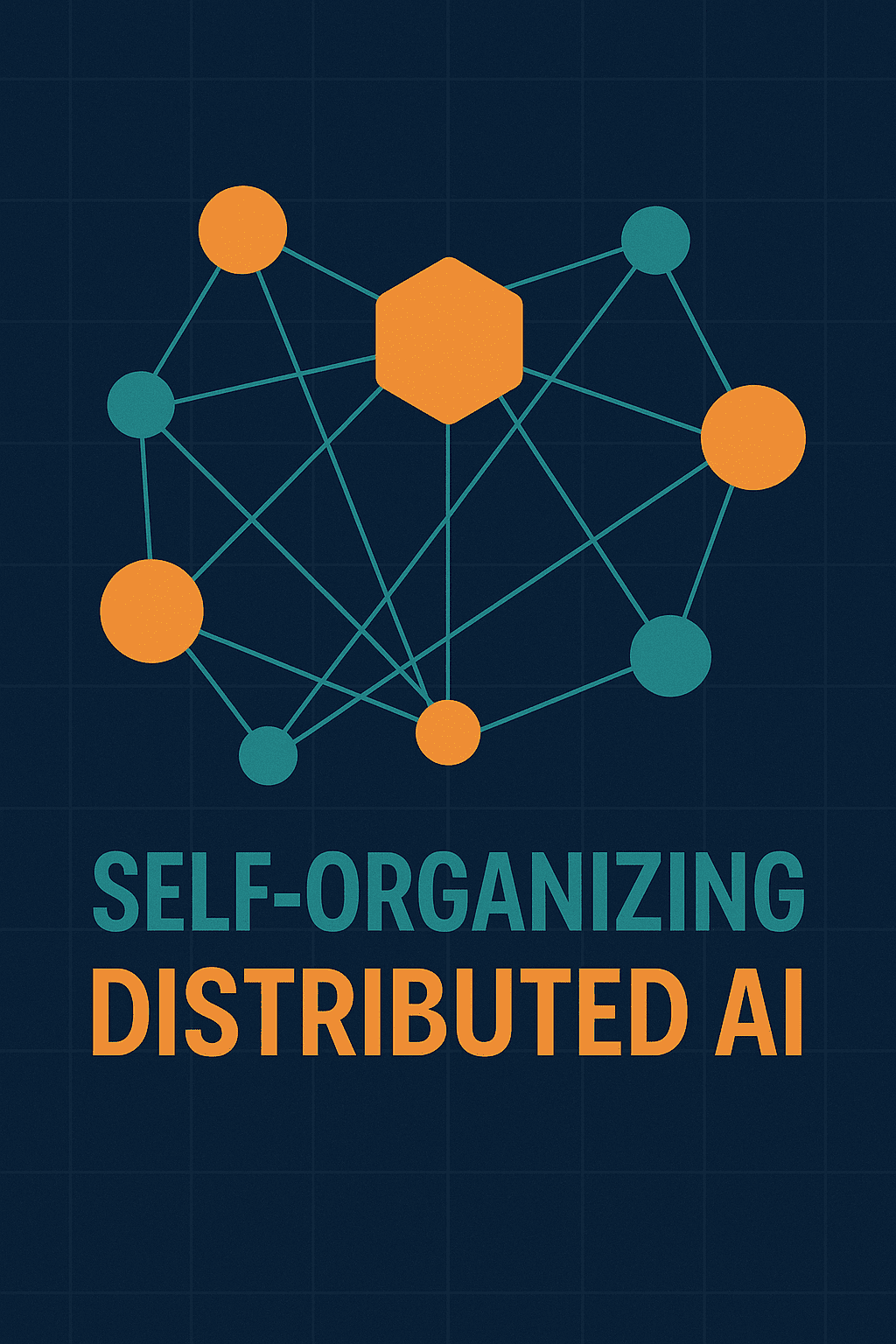
Imagine a network of intelligent nodes, each with access to local data and limited computational power, yet collectively able to construct a coherent map of the world around them. This is the essence of a new frontier in artificial intelligence: distributed learning through self-organizing networks. In this paradigm, AI no longer depends on a single central processing unit but emerges as a collective property of cooperating agents, each contributing to information processing and the evolution of global knowledge.
Self-Organizing Maps as the Engine of Collaboration
At the heart of this vision lie distributed self-organizing maps, inspired by the behavior of biological neurons. Each node develops a local representation of the data, and through continuous exchanges with neighboring nodes, the network converges toward a shared understanding. It’s a form of emergent intelligence that adapts to the environment, scales with system complexity, and ensures resilience to local failures or attacks.
Real-World Impact Across Industries
The real-world applications of this paradigm are numerous. In industrial settings, it can enable coordination among intelligent machines distributed across a production line. In environmental monitoring networks, it allows large-scale data collection without the need for continuous transmission to a central server, significantly reducing energy consumption. Even in healthcare, distributed AI systems can analyze physiological parameters in real time, enhancing early diagnosis capabilities in geographically isolated areas.
Scalable, Resilient, and Locally Intelligent AI
The strength of this distributed intelligence lies in its scalability and flexibility: the more nodes participate, the better the system performs, without becoming fragile or inefficient. It’s a new way of thinking about AI, where knowledge isn’t imposed from above but built collectively, node by node, data by data. A vision that paves the way for autonomous, resilient systems capable of learning wherever data exists, even in places with poor or no connectivity.
A nonuniform quantizer for hardware implementation of neural networks
Nonuniform quantization and genetic algorithms optimize neural networks for efficient implementation on low-precision hardware.
R. Altilio, A. Rosato, M. Panella
Leggi il paper

A nonuniform quantizer for hardware implementation of neural networks

R. Altilio, A. Rosato, M. Panella
The Challenge of Neural Networks on Low-Precision Hardware
The demand for real-time data processing on low-cost, low-power devices is growing, particularly in areas like sensor networks and IoT. However, neural networks, especially those designed for large-scale, distributed data, are computationally demanding and difficult to deploy on simple microcontrollers. A key challenge is quantizing neural network parameters in a way that retains accuracy without burdening the hardware.
Introducing Nonuniform Quantization for Efficient Data Processing
The solution lies in nonuniform quantization, where the input data to a neural network is converted using customized levels, rather than standard uniform quantization. This approach tailors the quantization process to the structure of the data being processed, preserving its essential characteristics even when using hardware with limited precision. By introducing this method, neural networks can be implemented more efficiently on low-resource devices.
Optimizing Quantization Levels with Genetic Algorithms
To optimize this process, a genetic algorithm (GA) is employed to fine-tune the quantization levels. The GA seeks the optimal configuration of parameters, enhancing performance even when only a few bits are used for quantization. Experimental results on common datasets such as Airfoil, Concrete, and Energy show that the nonuniform quantization approach significantly improves the accuracy of data processing while reducing computational load.
Real-World Performance: Enhancing Accuracy with Limited Resources
In practical terms, this method allows for the deployment of neural networks on simple hardware like microcontrollers, making advanced machine learning capabilities more accessible and energy-efficient. The proposed solution bridges the gap between the need for complex data analysis and the constraints of low-power hardware, making it ideal for a range of real-time, distributed learning applications.
Finite precision implementation of random vector functional-link networks
Optimized RVFL neural networks enable accurate AI on low-power hardware using finite precision and genetic algorithms.
A. Rosato, R. Altilio, M. Panella
Leggi il paper

Finite precision implementation of random vector functional-link networks

A. Rosato, R. Altilio, M. Panella
The Challenge of Efficient AI in IoT Devices
In the hyper-connected world of the Internet of Things and sensor networks, many scenarios share a common challenge: processing massive amounts of data on low-cost devices with minimal computational resources. This is where an innovative solution comes into play: implementing Random Vector Functional-Link (RVFL) neural networks optimized for low-precision hardware.
Transforming Neural Networks for Limited Hardware
The key to the approach is transforming traditional RVFLs into finite precision versions, where every parameter and operation is represented with just a few bits. This is essential for microcontrollers or embedded devices that need to process data in real-time without the computational power or memory of a traditional computer.
Optimizing Precision with Genetic Algorithms
But the process goes beyond simple rounding: to avoid the dramatic drop in accuracy typical of quantization, a genetic algorithm-based optimization strategy is employed. These algorithms search for the ideal parameters for each model, significantly improving performance even with representations using just 4 or 8 bits.
Proven Performance on Real-World Datasets
The technique was tested on several real-world datasets (from aerodynamic noise to concrete strength, building energy performance, and Istanbul Stock Exchange data), showing that even with a low number of bits, results can approach those of 64-bit models, thanks to genetic optimization.
Towards Affordable and Ubiquitous Artificial Intelligence
This approach makes RVFL neural networks truly practical for distributed, low-cost scenarios, paving the way for pervasive AI that can run efficiently on affordable, energy-saving devices without sacrificing predictive accuracy. A breakthrough for those aiming to bring AI everywhere, from sensors to global networks.
19/02/2018
Retrieving Chlorophyll-a Levels, Transparency and TSS Concentration from Multispectral Satellite Data by Using Artificial Neural Networks
AI and satellite data join forces to estimate water quality in Amazon reservoirs with high accuracy and minimal fieldwork.
H. A. Nascimento Silva, G. Laneve, A. Rosato, M. Panella
Leggi il paper
19/02/2018

Retrieving Chlorophyll-a Levels, Transparency and TSS Concentration from Multispectral Satellite Data by Using Artificial Neural Networks

H. A. Nascimento Silva, G. Laneve, A. Rosato, M. Panella
Smart Water Monitoring in Remote Areas
How can we assess water quality in remote, vast, and sensitive areas without collecting physical samples every time? The answer comes from an intelligent system that combines satellite data and artificial neural networks to estimate key parameters such as chlorophyll-a, transparency, and total suspended solids (TSS) in water reservoirs.
Satellite Imaging Across the Hydrological Cycle
At the heart of the method lies the use of multispectral images from the Landsat 7 satellite, covering the full annual hydrological cycle (flood, emptying, dry, refill). The visible and near-infrared bands are calibrated and atmospherically corrected to accurately estimate surface water reflectance.
Training Neural Networks with Real and Remote Data
These images feed into an artificial neural network trained on more than 30 satellite images and validated with laboratory measurements collected between 2007 and 2014. The model, tailored for each of the seven sampling points in a large Amazonian hydroelectric reservoir, was tested using robust Leave-One-Out cross-validation techniques.
Accuracy Across Seasonal Variations
The results? Performance improves during dry periods when cloud cover is minimal and satellite imagery is clearer. However, even during other hydrological cycles, the average estimation error remains low, making the system reliable for environmental monitoring.
Scalable and Non-Invasive Environmental Surveillance
This approach offers a dual advantage: it provides accurate estimates without the need for constant on-site measurements and enables large-scale continuous monitoring of reservoirs that are critical for ecological balance and water resource management. A concrete example of how artificial intelligence and satellite observation can together transform the way we observe and protect our ecosystems.
A Fuzzy Neural Network Approach to Quality Assessment of Water Reservoirs
Satellite imagery and fuzzy neural networks enable accurate estimation of key water quality indicators in large reservoirs.
H. A. N. Silva, A. Rosato, M. Panella
Leggi il paper

A Fuzzy Neural Network Approach to Quality Assessment of Water Reservoirs

H. A. N. Silva, A. Rosato, M. Panella
The Complexity of Monitoring Water Quality in Reservoirs
Water quality in large artificial reservoirs represents a complex challenge, where biological, chemical, and environmental factors interact in nonlinear and often hard-to-observe ways. Algal proliferation phenomena, in particular, can compromise both drinking and recreational uses of water resources, making it necessary to adopt monitoring strategies that are more systematic, less invasive, and more predictive than traditional approaches based solely on in situ sampling.
Combining Satellite Remote Sensing and Fuzzy AI
To address this challenge, an approach is developed that combines satellite remote sensing with fuzzy neural network models, aiming to estimate key water quality parameters such as chlorophyll-a, algal concentration, and turbidity. The core idea is to exploit the information contained in high-resolution multispectral satellite images and transform it into a numerical representation suitable for processing by machine learning models.
Wavelet-Based Feature Extraction from Multispectral Images
Satellite images are first selected at locations corresponding to reservoir sampling points and then preprocessed using a wavelet transformation. This step decomposes the spectral information into components that capture local variations and meaningful spatial structures, while simultaneously reducing noise and the dimensionality of the problem. The resulting components are concatenated into a compact feature vector, which serves as input for the predictive models.
Neuro-Fuzzy Models for Nonlinear Environmental Estimation
For the estimation phase, neuro-fuzzy systems and radial basis function networks are adopted, as they are capable of modeling strongly nonlinear relationships while incorporating a form of gradual reasoning typical of fuzzy logic. These models learn the mapping between the spectral response observed by the satellite and the measured physicochemical parameters, achieving generalization even in the presence of seasonal dynamics and pronounced environmental variability.
Validation on a Real Reservoir with Algal Blooms
The approach is validated on a real reservoir affected by recurrent algal bloom events, using data collected over multiple years and across different locations within the lake. The results show good predictive performance for all considered parameters, with particularly strong accuracy in turbidity estimation and stable behavior even for more challenging biological variables.
Toward Scalable and Continuous Water Quality Surveillance
Overall, this work demonstrates how the integration of satellite observation and fuzzy artificial intelligence can provide an effective tool for continuous water quality monitoring. An approach that reduces reliance on costly and discontinuous measurement campaigns, and opens the door to more responsive, scalable environmental surveillance systems capable of supporting informed water resource management decisions.
An Energy-Aware Hardware Implementation of 2D Hierarchical Clustering
Energy-aware hardware optimizations make 2D hierarchical clustering fast and practical for low-power embedded and edge devices.
G. C. Cardarilli, R. Fazzolari, M. Matta, M. Panella, A. Rosato, S. Spanò
Leggi il paper

An Energy-Aware Hardware Implementation of 2D Hierarchical Clustering

G. C. Cardarilli, R. Fazzolari, M. Matta, M. Panella, A. Rosato, S. Spanò
Why Energy Constraints Are Redefining On-Device Machine Learning
In recent years, the need to bring machine learning algorithms directly onto hardware has prompted a deep reflection on how to balance accuracy, speed, and energy consumption. Within this context, work has been carried out to make two-dimensional clustering feasible even in scenarios that are strongly constrained in terms of resources, such as sensor networks and low-power embedded systems.
A 2D Hierarchical Fuzzy Clustering Method as the Starting Point
The starting point is a two-dimensional hierarchical clustering algorithm based on a spatial representation of data and fuzzy membership functions. This approach makes it possible to identify complex data structures, even in the presence of overlapping clusters or nontrivial shapes, but it typically comes with a high computational cost that is poorly suited to energy-limited devices.
Hardware-Driven Simplifications for Parallel and Low-Precision Execution
To overcome this limitation, the focus shifted to a hardware-oriented implementation of the algorithm. Targeted mathematical simplifications are introduced, designed not to alter the behavior of the method but to make it more suitable for parallel execution and low-precision arithmetic. In particular, some computationally expensive operations are replaced with lighter approximations, such as the use of less costly distance measures and the reformulation of scaling factors to avoid complex multiplications and divisions.
A Parallel Fixed-Point Architecture for Efficient Grid Evaluation
The resulting architecture is designed to exploit the intrinsic parallelism of digital hardware, enabling the simultaneous evaluation of membership functions over multiple points of the two-dimensional grid. The adoption of fixed-point arithmetic with a limited number of bits helps to reduce energy consumption while preserving sufficient precision to maintain clustering quality.
Validating Accuracy While Gaining Speed and Energy Efficiency
System validation is performed by comparing the results of this hardware implementation with those of the original theoretical model. Tests on several two-dimensional datasets show that the introduced approximations do not compromise cluster identification, while the gains in speed and energy efficiency are significant.
Toward Distributed Unsupervised Intelligence at the Edge
The outcome is a concrete demonstration of how unsupervised learning algorithms can be adapted to real-world contexts where energy and computational resources are limited. It represents an important step toward integrating advanced data analysis techniques directly into devices, enabling distributed, efficient, and truly operational intelligence in the field.
Prediction of Photovoltaic Time Series by Recurrent Neural Networks and Genetic Embedding
Genetic optimization of time-delay embedding boosts recurrent neural network accuracy for photovoltaic time series forecasting.
A. Rosato, R. Araneo, M. Panella
Leggi il paper

Prediction of Photovoltaic Time Series by Recurrent Neural Networks and Genetic Embedding

A. Rosato, R. Araneo, M. Panella
The Need for More Reliable Solar Energy Forecasting
The growing diffusion of photovoltaic plants calls for increasingly reliable forecasting tools, capable of handling complex, nonlinear time series strongly influenced by seasonal and environmental factors. In this context, a forecasting system has been developed that combines recurrent neural models with evolutionary techniques, aiming to improve estimation accuracy while reducing the complexity of the input data.
Modelling Temporal Dynamics with Reservoir Neural Networks
At the core of the approach is the use of reservoir-based recurrent neural networks, designed to model complex temporal dynamics while maintaining an efficient learning structure. These networks are coupled with an intelligent mechanism for selecting historical information: not all past samples contribute equally to the prediction, and identifying a relevant subset becomes a crucial task.
Genetic Selection of Informative Time Delays
To address this challenge, a strategy based on genetic algorithms is introduced and used to automatically select the most informative time delays. This process enables the construction of compact representations of historical time series, reducing input dimensionality and enhancing the generalisation capability of predictive models.
Validation on Real Photovoltaic Production Data
The approach has been applied to real photovoltaic production data, analysed across multiple periods of the year to account for seasonal variability. The results show a systematic performance improvement compared to traditional forecasting techniques and other regression-based models, highlighting how evolutionary selection of past information leads to more stable and robust predictions.
Toward Adaptive and Intelligent Energy Management Systems
Overall, this integration of artificial intelligence and evolutionary optimisation demonstrates an effective way to tackle the complexity of energy time series, paving the way for smarter and more adaptive management systems in future power grids.
A Parallel Hardware Implementation for 2-D Hierarchical Clustering Based on Fuzzy Logic
Energy-aware FPGA architecture enables parallel fuzzy hierarchical clustering for real-time embedded intelligence.
G. C. Cardarilli, L. Di Nunzio, R. Fazzolari, M. Panella, M. Re, A. Rosato
Leggi il paper

A Parallel Hardware Implementation for 2-D Hierarchical Clustering Based on Fuzzy Logic

G. C. Cardarilli, L. Di Nunzio, R. Fazzolari, M. Panella, M. Re, A. Rosato
The Challenge of Embedding Complex Clustering in Low-Power Devices
A recurring challenge in embedded intelligent systems is how to bring complex machine learning algorithms into low-power devices without sacrificing performance and accuracy. In particular, two-dimensional hierarchical clustering is a powerful tool for applications such as computer vision, medical imaging, image retrieval, and smart sensing. Yet, its computational complexity often makes efficient hardware implementation difficult in practice.
Re-Engineering Fuzzy Hierarchical Clustering for Parallel Hardware
This work addresses that tension directly: it takes an unconstrained hierarchical clustering algorithm based on fuzzy logic and membership functions and completely rethinks it from a hardware perspective. The central idea is to exploit the intrinsic parallel structure of the algorithm to design an architecture capable of massively concurrent operation, reducing both computation time and energy consumption.
Grid-Based Fuzzy Membership and Persistent Hierarchical Structures
At the core of the method is a hierarchical clustering process operating on a normalised two-dimensional grid. Each grid point is evaluated with respect to dataset patterns through fuzzy membership functions. These functions are overlapped, thresholded at multiple levels, and analysed using connected components to generate a hierarchical cluster structure. The final result emerges from analysing cluster persistence across thresholds, providing robustness even in the presence of non-convex shapes and outliers.
Mathematical Simplifications for Hardware Efficiency
The real innovation lies in the hardware adaptation. To make the algorithm compatible with resource-constrained devices, targeted mathematical modifications are introduced: quantisation of the two-dimensional space, replacement of Euclidean distance with Manhattan distance, normalisation through binary shifts, and factorisation of the skewness parameter to enable multiplications implemented via barrel shifters. Each choice is driven by the goal of reducing logical complexity and eliminating costly divisions.
Massively Parallel Architecture for Real-Time Processing
The resulting architecture evaluates membership functions in parallel across an entire row of the 2D grid. Multiple evaluation modules operate simultaneously, while registers and counters coordinate the traversal of the space. The design is fully pipeline-friendly and achieves low latency, making it suitable for real-time scenarios.
FPGA Validation on Complex Two-Dimensional Datasets
Experimental validation is performed on multiple two-dimensional datasets with heterogeneous characteristics: concave clusters, nested structures, outliers, and varying densities. The FPGA implementation on a Xilinx Zynq platform shows that, despite the introduced approximations, the discrepancy between the hardware and original versions remains extremely limited. RMSE and correlation metrics demonstrate high fidelity in reconstructing overlapped membership functions, and the clustering results match those of the reference algorithm.
Parallelism, Accuracy, and Energy Control in a Unified Design
Full parallelisation, controlled energy consumption, scalability with respect to quantisation, and preservation of clustering performance: the system demonstrates that fuzzy logic, hierarchy, and low-power hardware implementation can be coherently integrated into a single solution. In a context where smart sensors and IoT devices increasingly require sophisticated local processing capabilities, this type of architecture represents a concrete step toward distributed intelligence that is not only accurate but also energy-aware.
Deep Neural Networks for Multivariate Prediction of Photovoltaic Power Time Series
Deep neural networks enhance photovoltaic power forecasting by leveraging multivariate time-series modelling.
F. Succetti, A. Rosato, R. Araneo, M. Panella,
Leggi il paper

Deep Neural Networks for Multivariate Prediction of Photovoltaic Power Time Series

F. Succetti, A. Rosato, R. Araneo, M. Panella,
The Variability of Photovoltaic Energy Production
Photovoltaic energy production is inherently variable. It depends on solar irradiance, temperature, weather conditions, and a range of environmental factors that interact in highly nonlinear ways. Managing this complexity requires tools capable of simultaneously interpreting multiple variables and transforming them into reliable time-based forecasts.
A Deep Learning Model for Multivariate Forecasting
In this context, a deep neural network–based model has been developed for multivariate prediction of photovoltaic time series. The core idea is to feed the network with a structured set of heterogeneous quantities (meteorological data, environmental parameters, and production measurements) organised within a temporal window designed to capture short- and medium-term dynamics. The architecture is built to learn complex relationships among correlated inputs, moving beyond traditional univariate approaches.
Layered Architecture and Training Strategy
The model structure integrates multiple hidden layers, enabling the progressive extraction of increasingly abstract representations of the input signals. The training phase relies on real-world datasets collected from photovoltaic plants, with careful separation between training and validation data. The objective is not only to minimise average error, but also to ensure predictive stability under sudden variations in environmental conditions.
Multidimensional Representation of Time Series
Special attention is devoted to constructing the multidimensional input. Time series are not treated as simple linear sequences but as matrices of interdependent information, in which each time step encapsulates an overall energetic and climatic state. This allows the network to identify recurring patterns, seasonality effects, and latent correlations among physical variables.
Quantitative Evaluation and Performance Gains
System performance is evaluated using standard quantitative metrics commonly adopted in the energy domain, comparing forecasts with actual production values. The results show a significant reduction in prediction error compared to simpler models, highlighting the deep network’s ability to adapt to the highly nonlinear nature of the phenomenon.
Toward Data-Driven Renewable Energy Systems
The proposed framework goes beyond theoretical modelling and fits into a concrete application scenario: intelligent management of photovoltaic plants and microgrids. More accurate power forecasts enable better storage optimisation, improved grid exchange planning, and enhanced overall system efficiency. Looking ahead, this type of approach represents a step toward increasingly data-driven energy infrastructures, where artificial intelligence does not merely analyse the past but becomes an operational tool for shaping the future of renewable energy production.
Two-stage dynamic management in energy communities using a decision system based on elastic net regularization
A two-stage forecasting-optimization system for efficient management of energy communities.
A. Rosato, M. Panella, A. Andreotti, Osama A. Mohammed, R. Araneo,
Leggi il paper

Two-stage dynamic management in energy communities using a decision system based on elastic net regularization

A. Rosato, M. Panella, A. Andreotti, Osama A. Mohammed, R. Araneo,
The future of distributed energy: how AI is revolutionizing energy communities
Energy communities are undergoing a groundbreaking transformation. With the increasing adoption of renewable energy sources and energy storage systems, integrating advanced technologies is essential to address challenges such as managing production variability and balancing consumption. Here, artificial intelligence proves indispensable, offering innovative solutions to enhance efficiency and sustainability.
Predicting the future: LSTM networks to anticipate energy demand and supply
Recurrent neural networks, such as LSTMs, enable precise forecasting of renewable energy production and load consumption. This approach anticipates seasonal and daily variations, improving the operational management of distributed resources. A practical example: in an energy community in Southern Italy, which includes 11 loads and 3 distributed generators such as wind turbines and photovoltaic systems, consumption and production profiles were predicted with an average error margin of less than 10%. Simulations included complex scenarios, such as variations in photovoltaic generation during winter, demonstrating that even under adverse weather conditions, the model quickly adapts while maintaining reliable forecasts.
Elastic Net: dynamic optimization to balance consumption and generation
The integration of the Elastic Net methodology in energy management has introduced unprecedented efficiency levels. Using regularization parameters that balance accuracy and efficiency, the system optimizes the operation of storage systems, generators, and loads. In tests conducted in June and December, cumulative imbalances were reduced from 11.5 MWh to 5.5 MWh and from 12.1 MWh to 10.3 MWh, respectively. This result was achieved through careful load management without compromising user comfort. Additionally, batteries were strategically deployed to minimize sudden variations in the grid. The optimization system limits excessive battery use, reducing the risk of premature wear and ensuring optimal operational lifespan.
Real-world applications: success stories in energy communities
The results are tangible: in tests conducted on real data, the system significantly reduced grid imbalances by using storage systems strategically and minimizing reliance on unsustainable energy sources. Moreover, thanks to short-term forecasting, resources such as wind turbines, photovoltaic systems, and electric vehicle charging stations were effectively integrated. This allowed users to actively participate in energy management through economic incentives and reduced operational costs.
A model for sustainable and shared energy
This technology not only enhances the resilience of local grids but also serves as a replicable paradigm in both urban and rural contexts. The combination of AI, Elastic Net, and LSTM networks offers a scalable model for the future of smart grids, where sustainability and innovation go hand in hand.
2-D Convolutional Deep Neural Network for the Multivariate Prediction of Photovoltaic Time Series
A 2D CNN-LSTM model turns weather and PV data into sharper multivariate solar power forecasts.
A. Rosato, R. Araneo, A. Andreotti, F. Succetti, M. Panella
Leggi il paper

2-D Convolutional Deep Neural Network for the Multivariate Prediction of Photovoltaic Time Series

A. Rosato, R. Araneo, A. Andreotti, F. Succetti, M. Panella
When Deep Learning Learns to Predict Solar Energy
The transition toward increasingly distributed and sustainable energy systems has turned renewable energy forecasting into a central component of modern energy engineering. In the case of photovoltaic plants, the ability to accurately anticipate how much energy will be produced in the coming hours becomes crucial for power grid management, energy market optimisation, and the coordination of distributed resources. The work addresses this challenge by introducing a new deep learning scheme designed for multivariate energy time series forecasting. The central idea is to exploit information coming simultaneously from multiple physical variables, not only the power produced by a photovoltaic plant, but also correlated meteorological measurements, in order to improve prediction accuracy over time.
From Univariate Forecasting to Understanding Correlated Phenomena
Traditionally, many energy forecasting techniques rely on univariate approaches, where a model predicts the future behaviour of a variable based solely on its past values. In the renewable energy domain, however, this approach presents clear limitations, since energy production depends on a complex network of environmental phenomena. To overcome this limitation, a multivariate paradigm is adopted in which several time series are considered simultaneously. In addition to the power generated by a photovoltaic plant, the model incorporates meteorological variables such as temperature, wind speed and direction, atmospheric pressure, humidity, and turbulence-related indicators. These quantities contain indirect but relevant information about solar radiation behaviour and atmospheric conditions that influence energy production. The goal therefore, becomes identifying the temporal and physical relationships that connect these variables, transforming a heterogeneous set of environmental measurements into a representation suitable for forecasting.
When Time Series Become Images
The most original methodological contribution concerns how the data are represented inside the neural network. Instead of treating time series as independent sequences, samples from different variables and different time instants are organised into a two-dimensional structure that resembles an image. This transformation makes it possible to apply convolutional techniques typically used in computer vision. Convolutional filters analyse simultaneously the relationships among different variables and the dependencies over time, generating feature maps that capture the most relevant correlations among the observed phenomena. Through this process, the network automatically builds a richer representation of the data compared to traditional time series embedding methods. The result is a set of features that describe not only the temporal evolution of energy production, but also the interactions among multiple environmental variables.
A Neural Architecture Combining Memory and Perception
The proposed architecture integrates two fundamental components of modern deep learning. The first consists of a bidimensional convolutional layer responsible for automatically extracting informative features from multivariate sequences. The second is an LSTM network, a specialised type of recurrent neural network designed to capture long-term temporal dependencies. The features produced by the convolutional stage are converted into sequences that feed the LSTM network, which performs the actual prediction task. Thanks to its memory cell structure, the LSTM can retain relevant information across multiple time steps and model complex temporal dynamics in the data. The entire system can therefore be interpreted as a deep architecture composed of specialised layers: some dedicated to extracting structured representations from the data, and others focused on modelling the temporal dynamics that govern energy production.
Experiments on Real Photovoltaic Production Data
To evaluate the effectiveness of the method, the system is tested using real-world data collected from a photovoltaic power plant located in the United States. The dataset includes two years of hourly observations related to both energy production and several meteorological variables, including temperature, wind speed, wind direction, humidity, and atmospheric pressure. The performance of the proposed model is compared with architectures based solely on traditional LSTM networks. Experiments are conducted across different months of the year and under various forecasting horizons, considering both short-term predictions over a few days and more demanding extended forecasting scenarios. The results show that the integration of bidimensional convolution and LSTM enables the model to better exploit the information contained in multivariate datasets. In many experimental configurations, the proposed scheme achieves lower prediction errors than traditional approaches, demonstrating a stronger capability to capture correlations between meteorological phenomena and energy production.
Toward Smarter Energy Systems
The value of this approach extends beyond photovoltaic forecasting alone. The methodology illustrates how artificial intelligence can integrate heterogeneous sources of information to improve the understanding of complex energy systems. In the future, models of this kind may become key components of advanced energy management systems, intelligent microgrids, and virtual power plants that coordinate multiple renewable sources. Improving the ability to forecast energy production means increasing the stability of the entire energy ecosystem and facilitating the large-scale integration of renewable resources. The evolution of deep learning techniques applied to energy time series, therefore, points toward a clear direction: not merely observing data, but building models capable of interpreting the physical relationships that govern the system. In this perspective, artificial intelligence becomes a tool to transform the complexity of environmental data into actionable knowledge for managing the energy systems of the future.
05/08/2021
Deep learning-based Structural Health Monitoring for damage detection on a large space antenna
LSTM networks detect and localize structural damage in large space platforms by learning vibration patterns from sensor data.
P. Iannelli, F. Angeletti, P. Gasbarri, M. Panella, A. Rosato
Leggi il paper
05/08/2021

Deep learning-based Structural Health Monitoring for damage detection on a large space antenna

P. Iannelli, F. Angeletti, P. Gasbarri, M. Panella, A. Rosato
The Rise of Large and Flexible Space Structures
In recent years, the evolution of space structures has led to the development of increasingly large, lightweight, and flexible platforms. Deployable antennas, extended trusses, and large solar arrays enable high performance but also introduce new vulnerabilities: even small local damages can compromise stability, pointing accuracy, and ultimately mission success. In this context, structural health monitoring is no longer a secondary activity but a core function for the autonomy and safety of space systems.
A Data-Driven Perspective on Structural Health Monitoring
The work addresses this challenge by adopting a fully data-driven approach based on the analysis of dynamic responses measured by sensors distributed across the structure. The underlying idea is simple yet powerful: even when local damage does not visibly alter the global behavior of the system, it leaves a signature in vibration and acceleration time series. Capturing these signatures requires models capable of learning complex temporal dependencies and distinguishing subtle patterns embedded in noise.
Simulating Damage in a Realistic Space Platform
To develop and validate the method, a large flexible space platform representative of an Earth observation mission is modeled, equipped with extensive antennas and solar panels. Multiple damage scenarios are simulated by introducing localized faults in critical structural elements. For each configuration, the dynamic behavior of the system is reconstructed during realistic attitude maneuvers, generating time series that replicate measurements from accelerometric sensors placed at strategic locations.
Learning Structural Signatures with LSTM Networks
At the core of the analysis are deep neural networks based on Long Short-Term Memory architectures, specifically designed to handle multivariate time series. These models can retain relevant information over extended temporal windows, making them particularly well suited to discriminate between very similar structural responses. The networks are trained to solve the problem as a sequence-to-label classification task, associating each time series with the corresponding structural configuration, either healthy or damaged.
Preprocessing Time Series to Enhance Damage Detection
A key aspect of the work concerns data preprocessing. The sequences are appropriately truncated to focus on the most dynamically informative phases and normalized with respect to a nominal undamaged model, thereby amplifying the differences induced by faults. This step proves crucial in improving learning effectiveness and performance robustness.
Accurate Damage Localization with Limited Sensor Data
The results show that the system can accurately identify both the presence and the location of damage, even when using a limited number of sensors. The analysis also highlights how information quality and the selection of temporal windows have a direct impact on performance, confirming that it is not the quantity of data that matters most, but their dynamic relevance.
Toward Autonomous and Resilient Space Systems
Overall, the work demonstrates how deep learning techniques applied to time series can become an effective tool for structural health monitoring of large space systems. The approach opens the way to increasingly autonomous diagnostic solutions, capable of supporting rapid in-orbit decisions and reducing dependence on complex physical models, contributing to a new generation of intelligent and resilient space systems.
A Fast Deep Learning Technique for Wi-Fi-Based Human Activity Recognition
A fast AI-based approach for Wi-Fi-based human activity recognition achieves real-time, non-invasive monitoring.
F. Succetti, A. Rosato, F. Di Luzio, A. Ceschini, M. Panella
Leggi il paper

A Fast Deep Learning Technique for Wi-Fi-Based Human Activity Recognition

F. Succetti, A. Rosato, F. Di Luzio, A. Ceschini, M. Panella
The Role of Wi-Fi in Human Activity Recognition
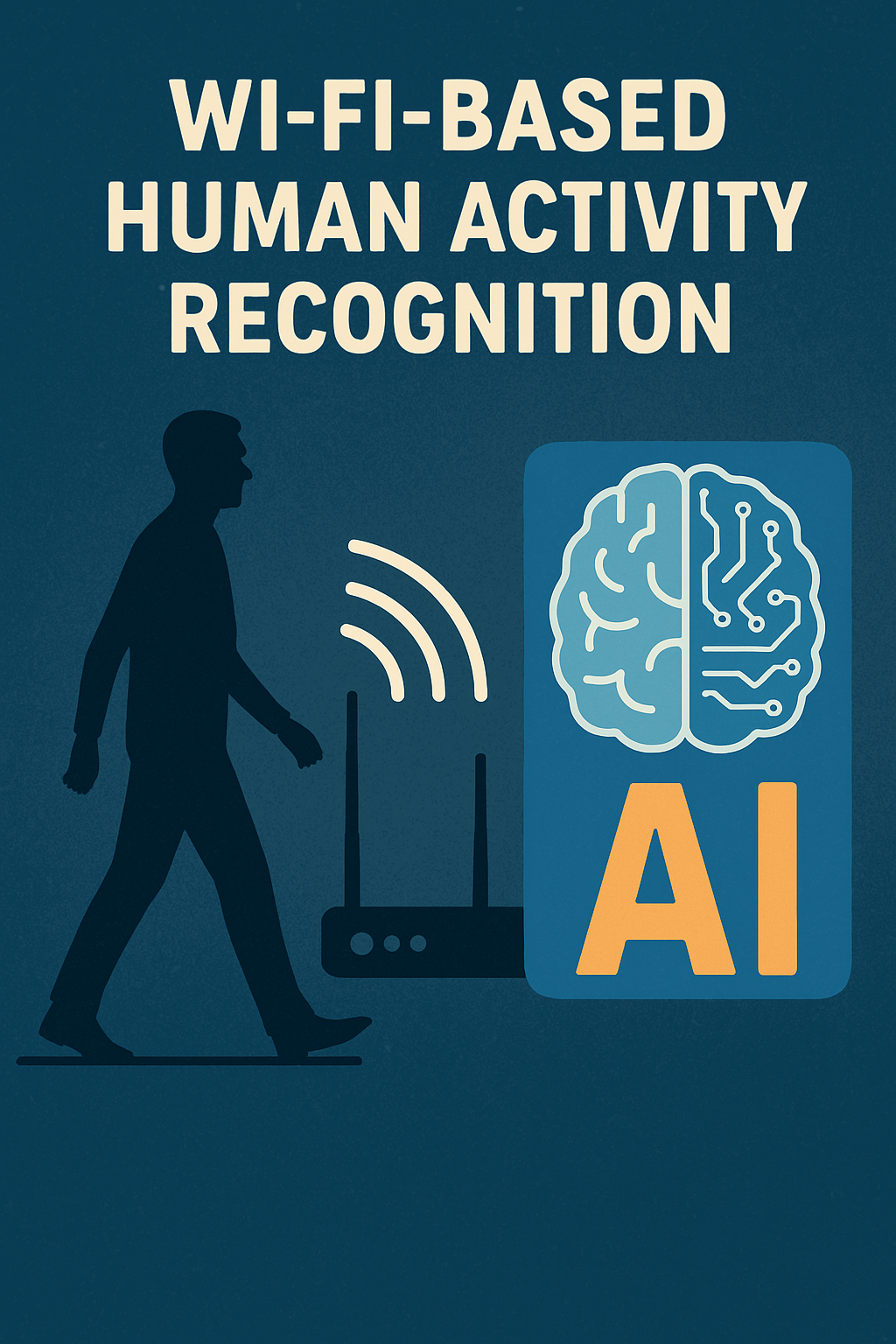
Human Activity Recognition (HAR) is one of the most interesting and promising challenges in the field of artificial intelligence. The applications are numerous, ranging from healthcare to security, with the goal of monitoring and understanding human behavior in real time. Traditionally, this type of analysis has relied on wearable sensors or external devices, but with the pervasive adoption of Wi-Fi networks, a new perspective has emerged. By using Channel State Information (CSI) data from Wi-Fi devices, it is possible to accurately recognize human activities in a non-invasive manner, leveraging Deep Learning techniques for time-series analysis.
AI Technologies for Activity Recognition with CSI
CSI, which contains information about the attenuation and phase shifts of electromagnetic waves during Wi-Fi transmission, has proven to be a much more accurate alternative to other methods such as Received Signal Strength (RSS). Unlike RSS, CSI offers a much more detailed view of movements, able to capture very subtle variations caused by small shifts or changes in human behavior. With advanced deep learning techniques like Convolutional Neural Networks (CNNs) and Recurrent Neural Networks (RNNs), this data can be analyzed in real-time to recognize a wide range of activities, from walking, sitting, standing, to fall detection.
An Innovative Approach: Deep Neural Networks for Fast Recognition
The introduction of fast Deep Learning models has radically changed how CSI data are analyzed. A practical example of this innovation is the use of a 1D-CNN, which allows for efficient extraction of relevant features, maintaining high accuracy while being fast. This architecture avoids the long training times required by recurrent networks like LSTMs, without sacrificing accuracy in activity classification. In scenarios where fast detection is crucial, this approach marks a significant step forward for real-time applications such as elderly monitoring or smart homes.
Real-World Applications and the Advantages of Wi-Fi-Based Systems
The adoption of Wi-Fi technology for human activity recognition offers numerous tangible benefits. In health monitoring, for example, CSI analysis can be used to detect critical activities such as falls, providing timely assistance without the need for wearable devices. This approach addresses privacy concerns, as it does not require physical contact with the subject being monitored, unlike traditional wearable sensors. Additionally, the system can be easily integrated into existing Wi-Fi infrastructures, reducing costs compared to more invasive solutions like radar or infrared sensors.
A Barrier-Free Future: Non-Invasive Monitoring with AI
Wi-Fi and AI-based activity recognition not only enhances the effectiveness of monitoring solutions but also represents a scalable solution. The system is suitable for a wide range of applications, from personal security to remote healthcare management, to the creation of smart homes. In the future, with the improvement of technologies and the adoption of faster, more accurate models, automatic activity analysis via Wi-Fi will become the standard, contributing to making daily life safer and more intelligently monitored without invasiveness.
Multivariate Time Series Analysis for Electrical Power Theft Detection in the Distribution Grid
A convolutional neural network analyzes multivariate time series to detect energy theft in distribution grids effectively.
A. Ceschini, A. Rosato, F. Succetti, R. Araneo, M. Panella
Leggi il paper

Multivariate Time Series Analysis for Electrical Power Theft Detection in the Distribution Grid

A. Ceschini, A. Rosato, F. Succetti, R. Araneo, M. Panella
How artificial intelligence transforms the fight against energy theft
The challenge of energy theft is one of the most critical issues for distribution network operators. In addition to causing significant economic losses, theft can compromise the quality of electricity supply, lead to blackouts, and slow down the transition to sustainable energy. With the introduction of smart grids and advanced meters, it is now possible to tackle this issue using cutting-edge artificial intelligence technologies. This innovative study proposes a system based on deep neural networks, such as CNNs, to detect energy theft through the analysis of multivariate time series, demonstrating how AI can revolutionize the automatic detection of anomalies.
A solution based on real-world data
The developed system leverages CNNs to analyze data collected in real-world scenarios, such as industrial sites with verified theft incidents. The data, acquired from multiple sensors, include variables such as cumulative active and reactive energy, total monthly power, and average power calculated across different time slots. These datasets, manually labeled based on certified reports, enable the model to identify anomalies in consumption and pinpoint the moments when theft occurs. Thanks to its multivariate structure, the system can uncover hidden correlations among variables, providing a more comprehensive view compared to traditional methods.
Promising performance in real-world conditions
The system was tested on five years of data, encompassing consumption profiles of users with 548 sequences sampled monthly. With an average accuracy of 76.1% in binary classification and 78.4% in a multiclass problem, the model has proven to be reliable and robust. Despite the complexity of the analyzed sequences and the variability of the case studies, the CNN effectively distinguished between regular and irregular consumption, significantly reducing error margins.
A future without waste
This technology is not limited to detecting theft; it marks a significant step toward more efficient and resilient management of distribution networks. By automating traditionally slow and costly processes, such as manual meter inspections, the system helps reduce economic and energy losses. Additionally, the scalability of the model makes it suitable for diverse contexts, from urban to industrial areas, seamlessly integrating with modern smart grid infrastructures.
Few-shot Federated Learning in Randomized Neural Networks via Hyperdimensional Computing
Fast, private AI learning from few examples using hyperdimensional computing and randomized networks across distributed devices.
A. Rosato, M. Panella, E. Osipov, D. Kleyko
Leggi il paper

Few-shot Federated Learning in Randomized Neural Networks via Hyperdimensional Computing

A. Rosato, M. Panella, E. Osipov, D. Kleyko
Learning Without Centralization: A Modern Necessity
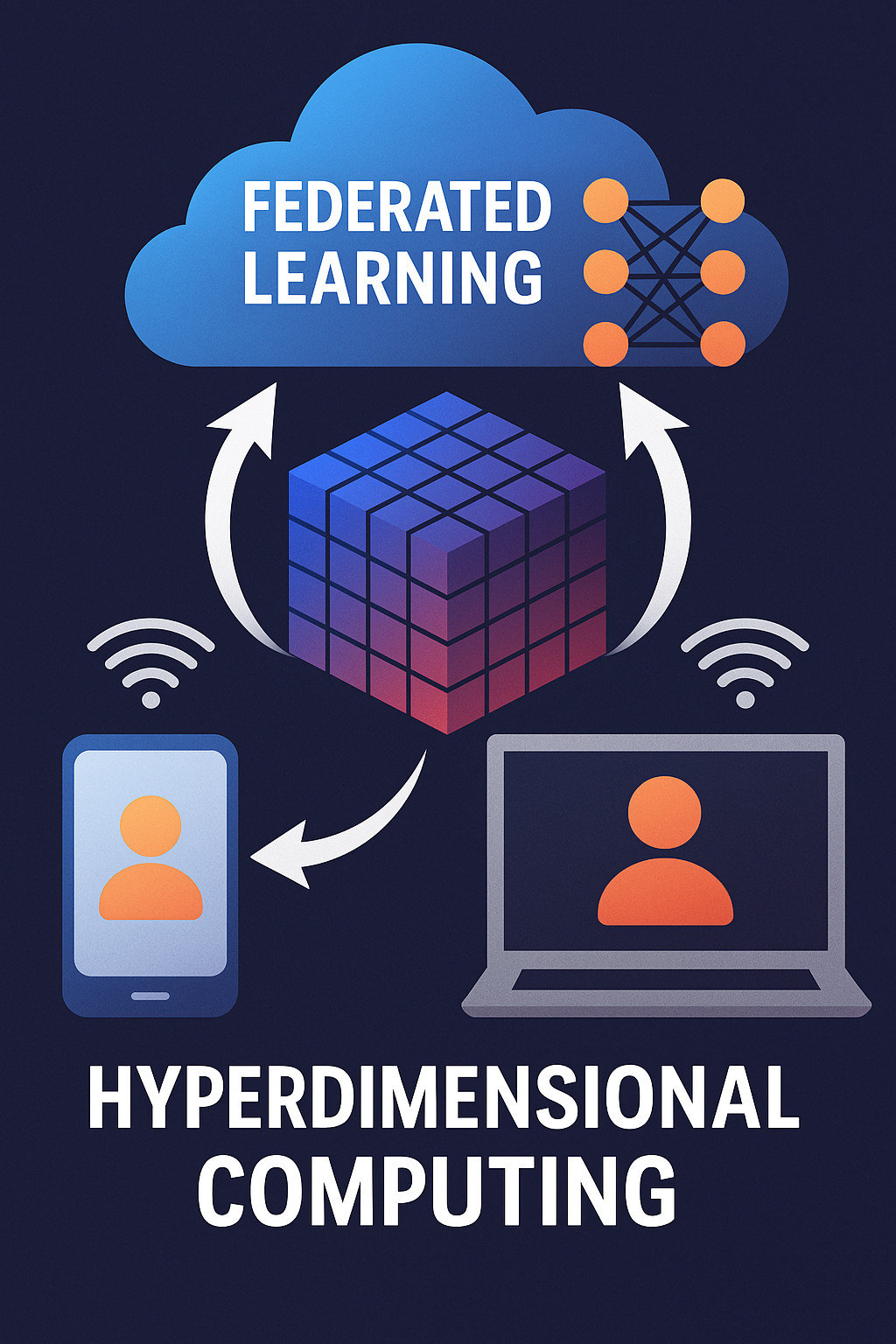
In today’s hyperconnected world, the ability to train intelligent models without centralizing data is not just an advantage, it’s a necessity. Think of privacy, the communication limits of edge networks, or devices with limited computational power. This is where a new frontier is emerging: a distributed system powered by randomized neural networks and enhanced through hyperdimensional encoding, capable of learning quickly from just a few examples while sharing only the bare minimum.
Randomized Neural Networks Meet Hyperdimensional Encoding
At the heart of this system are models known as Random Vector Functional Links, which can be trained extremely fast and without backpropagation. But the true innovation lies in how these models share knowledge: instead of transmitting raw data or large model weights, they exchange a compressed, hyperdimensional representation of their classifier, produced through brain-inspired operations like binding and superposition. This leads to lower network traffic, increased privacy, and faster learning.
Few-Shot Learning
Hyperdimensional Computing doesn’t just compress efficiently, it performs surprisingly well. Tests across more than 100 real-world datasets showed that the system maintains an average accuracy above 70%, even in challenging scenarios with uneven data distribution across nodes. In certain network topologies, such as ring structures, it exceeds 80% accuracy in complex cases, thanks to its ability to merge local knowledge into a robust global model. This solution proves reliable even under extreme conditions: from networks of 10 to 100 nodes, the model remains stable and accurate, confirming its scalability. All this is achieved with minimal communication, often just two exchanges per node.
Endless Real-World Applications
Real-world applications? Practically endless. From healthcare to smart cities, environmental monitoring to wearables, anywhere that requires fast, distributed, privacy-respecting learning. A bold step toward lighter, more collaborative, and human-centered artificial intelligence.
06/12/2022
A randomized deep neural network for emotion recognition with landmarks detection
Novel randomized DNN uses facial landmarks for fast emotion recognition.
F. Di Luzio, A. Rosato, M. Panella
Leggi il paper
06/12/2022

A randomized deep neural network for emotion recognition with landmarks detection

F. Di Luzio, A. Rosato, M. Panella
The Importance of Emotions and AI's Role
In the complex tapestry of human interaction, emotions play a leading role. They are the compass guiding our decisions, coloring our perceptions, and shaping our relationships. Correctly recognizing and interpreting the moods of others is an intrinsically human ability, fundamental for empathy and effective communication. But what if machines could also develop such sensitivity? AI is opening previously unimaginable frontiers in this field.
Decoding Dynamic Facial Expressions
The human face is an incredibly rich expressive canvas. The subtlest muscle contractions, the tilt of the eyebrows, the curve of the lips: every detail can convey valuable information about a person's emotional state. AI is proving particularly adept at analyzing these micro-expressions, going beyond the simple interpretation of static images. Advanced technologies can now process video sequences, capturing the dynamics of emotional expression as it evolves over time.
The Facial Landmark Approach
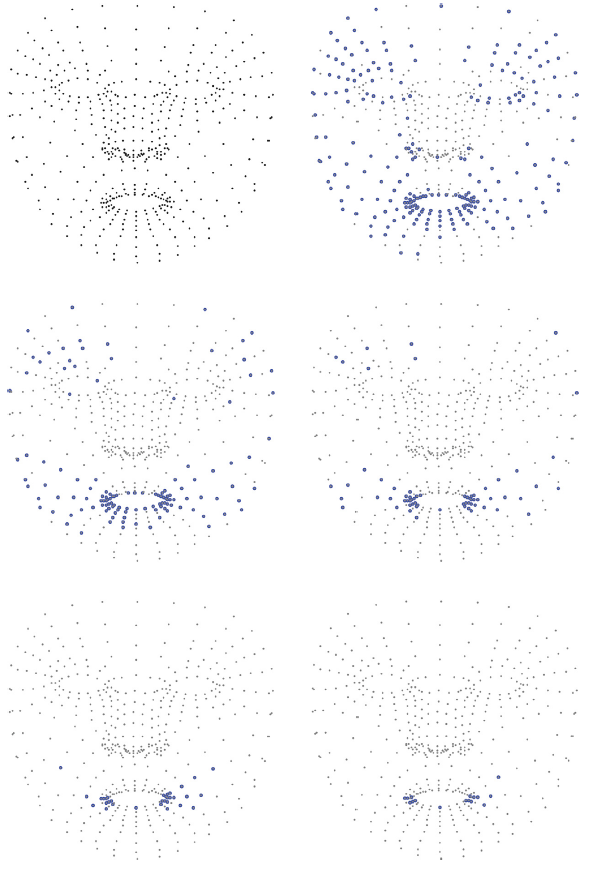
An innovative approach relies on identifying and tracking hundreds of "landmarks" on the face. Imagine an incredibly detailed digital map of the face, composed of nearly 500 key points. By monitoring the precise coordinates of these points and their variation from one frame to the next, AI algorithms can reconstruct the emotional flow with remarkable accuracy, distinguishing between states like joy, sadness, surprise, anger, fear, or disgust. This method allows capturing not only the peak emotion but also the transition from a neutral state to the full expression.
Balancing Accuracy and Speed with Randomization
But how can these analyses be made not only accurate but also fast and efficient, especially for applications requiring real-time responses? This is where a fascinating concept comes into play: "randomized" neural networks. Instead of meticulously training every single parameter of the neural network, a process that can require significant time and computational resources, some parts of the network are set with random values and then "frozen." This approach, while potentially involving a very slight reduction in theoretical accuracy, drastically speeds up the learning phase and the algorithm's execution. It's a smart trade-off between accuracy and speed, crucial for bringing these technologies into the real world, onto devices with limited capabilities, or in scenarios where latency is critical.
Transformative Real-World Applications
The potential applications of AI capable of "reading" emotions are vast and transformative. Consider the healthcare sector: systems capable of monitoring subtle changes in facial expressions could aid in the early diagnosis of conditions like depression or chronic stress, supporting doctors and patients. Imagine e-learning systems that adapt educational materials based on the student's emotional reaction, making learning more personalized and effective. Or even more intuitive and empathetic human-machine interfaces, capable of responding more appropriately to our moods, enhancing user experience in countless contexts, from recommendation systems to road safety.
Towards Emotionally Aware Technology
The integration of AI into emotion recognition is not science fiction. By leveraging detailed facial landmark analysis and the efficiency of randomized networks, we are building systems increasingly capable of understanding the complex language of human emotions. This opens doors to a future where technology is not only functional but also more aware and attuned to our emotional experiences, promising significant improvements in crucial areas like health, education, and daily interaction.
29/12/2022
A Study on structural health monitoring of a large space antenna via distributed sensors and deep learning
AI-powered Bi-LSTM detect structural damage in flexible satellite antennas with over 99% accuracy using onboard sensor data.
F. Angeletti, P. Iannelli, P. Gasbarri, M. Panella, A. Rosato
Leggi il paper
29/12/2022

A Study on structural health monitoring of a large space antenna via distributed sensors and deep learning

F. Angeletti, P. Iannelli, P. Gasbarri, M. Panella, A. Rosato
Artificial Intelligence in Space: Structural Health Monitoring for Flexible Satellite Antennas
When we think of Artificial Intelligence (AI) in space, we often picture autonomous rovers on Mars or satellites processing images in real time. Yet one of the most concrete and strategic applications is emerging in a less visible, but crucial, domain: the structural monitoring of large space antennas.
The Challenge of Monitoring Fragile Components in Orbit
As scientific missions grow more complex, satellites are equipped with increasingly wide and lightweight appendages, such as Large Mesh Reflector Models. These structures are essential for data collection, but also highly vulnerable to localized damage which, if undetected, can irreversibly compromise the mission.
How Deep Learning Detects Structural Anomalies
The answer lies in AI, specifically, Deep Learning. A recent study has shown how an advanced recurrent neural network, a Bi-LSTM (Bidirectional Long Short-Term Memory), can accurately detect breaks and partial damage in structural components of space antennas by analyzing data from a distributed network of accelerometers installed on the structure.
From Realistic Data to High-Accuracy Detection
The system simulates the satellite’s dynamic behavior during orbital maneuvers and collects realistic data, including noise. The signals are normalized, segmented at key moments, and used to train the AI model. The outcome? In some cases, the model achieves over 99% accuracy in distinguishing between intact, damaged, or broken antenna states.
Sensor Placement as an AI-Driven Design Variable
One key insight concerns sensor placement: damage near the antenna’s attachment point to the satellite body is more easily detectable. For more peripheral injuries, such as those on the support truss, the AI has difficulty distinguishing between healthy and compromised conditions. This opens up new possibilities: using AI not just for data analysis, but also for optimizing sensor layout during the design phase.
Toward Autonomous, Resilient Satellite Architectures
In an era where every satellite component must deliver maximum reliability and resilience, intelligent monitoring systems like this may become an integral part of future space architectures. No longer limited to ground-based control or occasional inspections, they act as a true “orbital sixth sense,” capable of recognizing even the slightest sign of failure in real time. Because in space, even the smallest damage can make a huge difference.
Challenges and perspectives of smart grid systems in islands: a real case study
Integrating renewables with AI tools offers sustainable solutions, especially in isolated contexts.
F. Succetti, A. Rosato, R. Araneo, G. Di Lorenzo, M. Panella
Leggi il paper

Challenges and perspectives of smart grid systems in islands: a real case study

F. Succetti, A. Rosato, R. Araneo, G. Di Lorenzo, M. Panella
Renewable Energy Challenges for Island Systems
Islands like Ponza face unique challenges in achieving energy sustainability, primarily due to their reliance on imported diesel fuel. This dependency leads to high costs and frequent instability. Transitioning to renewable energy sources (RESs), such as photovoltaic (PV) and wind power, offers a promising alternative. However, intermittent energy production, limited storage options, and environmental constraints complicate the integration of RESs. Advanced technologies, including machine learning and deep learning, are instrumental in predicting energy demand and optimizing grid management.
The Role of Storage and Grid Innovations
Battery Energy Storage Systems (BESSs) play a pivotal role in stabilizing power grids with high RES penetration. For Ponza, the planned BESS infrastructure will provide a spinning reserve, manage fluctuations in RES production, and ensure consistent electricity supply during peak tourist seasons. Modernizing the grid further involves integrating automation, enabling real-time adjustments to power flows, and facilitating the seamless incorporation of new RES installations.
Predictive Insights Through AI
Artificial intelligence and deep learning techniques are applied to forecast energy production and demand accurately. These predictions are essential for designing efficient energy storage solutions and ensuring optimal use of RESs. On Ponza, machine learning models estimate future energy demand, incorporating variables like tourist influx, seasonal trends, and new electricity-driven initiatives such as electric vehicle charging stations and water desalination units.
Pathways to Sustainability
Achieving the 2030 targets outlined for Ponza involves significant upgrades to energy infrastructure. These include deploying RES systems with a capacity of up to 2.16 MW, installing advanced BESSs, and modernizing grid operations. By addressing environmental and logistical constraints, this approach aligns energy production with demand, reduces diesel reliance, and fosters long-term sustainability. The integration of smart grid systems ensures adaptability and efficiency, setting a benchmark for other islands globally.
Perceptron Theory Can Predict the Accuracy of Neural Networks
A perceptron-based theory predicts neural network accuracy using output statistics, fast, data-free, and surprisingly precise.
D. Kleyko, A. Rosato, E. Paxon Frady, M. Panella, F. T. Sommer
Leggi il paper

Perceptron Theory Can Predict the Accuracy of Neural Networks

D. Kleyko, A. Rosato, E. Paxon Frady, M. Panella, F. T. Sommer
From Black Boxes to Predictable Models
In recent years, deep neural networks have become the invisible engine behind much of today’s digital innovation, from image processing to autonomous driving. Yet, despite their effectiveness, they largely remain “black boxes”: powerful, but opaque. What if we could predict a model’s accuracy before fully training or testing it?
A Classic Theory Reimagined for Modern AI
This is where a revolutionary idea comes into play: reviving perceptron theory, one of the simplest structures in artificial intelligence, to predict the performance of complex neural networks. This modern statistical formulation, designed to operate on the output layer of any architecture, from recurrent networks to deep CNNs, allows for highly accurate estimates of a model's classification performance. The prediction relies only on a few statistical moments (such as mean and variance) of the postsynaptic sums, without needing to train any additional models.
High Accuracy Proven Across Models and Datasets
The results are impressive: this approach has been validated on over 120 real-world classification datasets and around 15 pretrained deep networks on ImageNet. In the latter case, the correlation between predicted and actual accuracy reaches 93%, with peaks of 97% using refined statistical approximations. Even in complex networks like ResNet, VGG, or NASNet, the method captures the model’s behavior with striking fidelity.
Scalable, Lightweight, and Data-Agnostic
Beyond precision, this model is both scalable and efficient: it can be applied to networks with thousands of output classes, reducing the entire evaluation process to a fast and non-invasive statistical analysis. In scenarios where data access is restricted (e.g., due to privacy), a variant of the method can estimate performance using only the final layer weights, still achieving notable predictive power.
A Step Toward More Transparent AI
The potential applications are wide-ranging: from selecting the best model in resource-constrained environments to building tools for explaining network decisions, and even detecting adversarial examples or outliers through the statistical behavior of activations.
Old Foundations for a New AI Era
In an era dominated by ever-larger and more complex models, rediscovering the simplicity and predictive power of a theory born over sixty years ago, and adapting it to modern AI, is not just an elegant intellectual move. It’s a decisive step toward more interpretable, trustworthy, and explainable neural networks.
02/08/2023
Modular quantum circuits for secure communication
Quantum modular circuits enable ultra-secure communication for fast, parallel encryption and decryption.
A. Ceschini, A. Rosato, M. Panella
Leggi il paper
02/08/2023

Modular quantum circuits for secure communication

A. Ceschini, A. Rosato, M. Panella
The Era of Quantum Cryptography
In the digital age, communication security is more crucial than ever. With the rise of cyber threats, traditional cryptography methods are becoming obsolete. The advent of Quantum Computing offers new prospects, enabling the creation of more advanced and impenetrable security systems. Among these innovations, quantum quasi-chaotic (QC) generators play a central role, capable of producing pseudorandom sequences with extremely high entropy, ideal for encrypting information in a highly secure manner.
Quantum Modular Circuits: The Key to Unbreakable Security
Current technologies rely on encryption systems that, although sophisticated, remain vulnerable to advances in quantum computing. Quantum modular circuits exploit modular arithmetic in a quantum context to generate and manage cryptographic keys in parallel, increasing the speed and robustness of encryption. At the heart of this approach is a nonlinear digital filter implemented through quantum modular operations that allow for the creation of a pseudorandom behavior ideal for encrypting and decrypting information. By using Quantum Modular Addition and Multiplication, these circuits can perform cryptographic transformations with inherent security far beyond that of classical methods, leveraging quantum superposition and entanglement to process multiple data streams simultaneously. This enables the construction of multi-channel encryption and decryption systems capable of handling several data flows in parallel without compromising performance.
Real-World Applications: Ultra-Secure Communications and Quantum Cryptography
The applications of these systems range from protecting government telecommunications to securing banking and financial networks. In the military sector, quantum quasi-chaotic generators could ensure secret transmissions that are impossible to decipher using conventional technologies. In telecommunications, their implementation could revolutionize end-to-end encryption, safeguarding sensitive data transmission even in highly vulnerable environments. Another key area is the Internet of Things (IoT), where billions of connected devices require advanced protection against intrusions. Quantum cryptography based on modular circuits represents a scalable solution that can ensure security even in the most complex and distributed systems.
Towards a Future of Quantum Communications
The large-scale implementation of these circuits is still in development, but experimental results show that quantum QC generators can outperform traditional solutions in terms of security and efficiency. With the advancement of quantum hardware and the development of error mitigation techniques, these systems could form the foundation of future ultra-secure communication networks. The adoption of modular quantum circuits for cryptography is not just a technological improvement, but a true revolution in digital security. In an increasingly connected world vulnerable to cyberattacks, quantum technologies represent the only path to ensuring absolute data protection.
An adaptive embedding procedure for time series forecasting with deep neural networks
A novel deep learning model that integrates adaptive embedding with bidirectional LSTMs to enhance time series forecasting.
F. Succetti, A. Rosato, M. Panella
Leggi il paper

An adaptive embedding procedure for time series forecasting with deep neural networks

F. Succetti, A. Rosato, M. Panella
More Reliable Forecasting with AI
From finance to energy and meteorology, time series forecasting is a crucial challenge across various industries. Analyzing historical data to predict future trends is often hindered by non-linearity, high variability, and long-term dependencies. Deep neural networks have proven to be powerful tools for tackling these issues, but their effectiveness is often limited by inefficient data handling and a heavy reliance on parameter optimization. A new approach based on adaptive embedding is revolutionizing time series forecasting by enhancing both accuracy and flexibility. This technique automatically extracts a compressed representation of historical data, reducing problem complexity and optimizing the predictive capabilities of neural networks.
LSTM and Adaptive Embedding: How It Works
At the core of this innovation lies a bidirectional Long Short-Term Memory (LSTM) network, structured in two layers. The first layer performs adaptive embedding, identifying the most relevant patterns in the time series without human intervention. This pre-training phase enables the model to better understand the underlying data structure. The second layer then uses this information to make more precise predictions. The key idea is to eliminate the need for separate feature extraction algorithms, integrating data analysis directly within the neural network. This not only simplifies the process but also makes the system more efficient and applicable to any context, from financial market fluctuations to intelligent energy management.
Real-World Applications
This approach has been tested in real-world scenarios, demonstrating high accuracy and versatility. It has been successfully applied to forecasting energy consumption, photovoltaic production, and financial data. The results show that the model reduces forecasting errors compared to traditional techniques, significantly improving its ability to adapt to highly dynamic data. A crucial advantage is its generalization capability: the system can be used across different industries without requiring extensive customization. This makes it a powerful tool for businesses and institutions that need reliable forecasts to optimize resource management.
Towards More Efficient Predictive Intelligence
The integration of adaptive embedding and deep neural networks marks a breakthrough in the world of forecasting. This approach not only improves model accuracy but also reduces computational load, making it ideal for real-time applications. With this technology, AI is becoming an increasingly strategic tool for understanding and anticipating complex phenomena, helping businesses and researchers make more informed, data-driven decisions.
08/08/2024
A Neural Network Symbolic Approach to Structural Health Monitoring in Aerospace Applications
A symbolic deep learning approach enhances structural health monitoring in aerospace achieving near-perfect damage classification.
F. Angeletti, F. Succetti, M. Panella, A. Rosato
Leggi il paper
08/08/2024

A Neural Network Symbolic Approach to Structural Health Monitoring in Aerospace Applications

F. Angeletti, F. Succetti, M. Panella, A. Rosato
Structural Monitoring: A Challenge for Space Missions
Ensuring the structural integrity of spacecraft and satellites is one of the most critical challenges for aerospace missions. Traditional visual inspection methods are often impractical in orbit, making it necessary to adopt advanced solutions based on distributed sensors and automated analysis algorithms. Among the main threats to the stability of space structures are impacts with orbital debris, extreme thermal oscillations, and material fatigue, all of which can compromise the proper functioning of satellites and their appendages, such as solar panels.
AI and Neural Networks for Damage Detection
The integration of Artificial Intelligence into structural health monitoring represents a paradigm shift. The use of deep neural networks, particularly Long Short-Term Memory (LSTM) networks, enables the analysis of time-series data from accelerometers and other sensors, identifying anomalies that could indicate structural damage. The adopted model leverages an innovative approach, combining symbolic representation of time series with a recurrent neural network architecture. By compressing information through Symbolic Aggregate approXimation (SAX), data dimensionality is reduced, improving processing speed and enhancing the model’s ability to recognize recurring patterns. This method transforms complex time-series data into symbolic sequences, simplifying the classification process and making the algorithm more robust to data variations.
Applications in Space: From Simulation to Reality
To test the system’s effectiveness, a simulation of a satellite with flexible solar panels equipped with acceleration sensors was conducted. The model was evaluated under multiple damage scenarios, replicating realistic conditions of impacts with space debris. The results showed that using symbolic representation enhances the accuracy of damage classification, achieving an almost 100% precision and significantly reducing false positives and negatives. The ability of an AI model to autonomously and reliably detect structural damage without human intervention is a crucial step forward for space missions. The combination of recurrent neural networks and dimensionality reduction techniques opens new possibilities for onboard automatic monitoring, essential for ensuring the safety and longevity of space infrastructures.
Towards a Future of Intelligent Monitoring
The adoption of AI in the aerospace sector is transforming the way space systems are monitored and managed. The ability to implement autonomous solutions based on deep learning and symbolic representation reduces computational load while improving diagnostic reliability. With advancements in onboard computing technologies, these solutions could become standard for satellite and space module monitoring, paving the way for a new era of autonomous and intelligent space exploration.
A variational approach to quantum gated recurrent units
A faster and efficient Quantum Gated Recurrent Unit (QGRU) improves time series forecasting.
A. Ceschini, A. Rosato, M. Panella
Leggi il paper

A variational approach to quantum gated recurrent units

A. Ceschini, A. Rosato, M. Panella
Quantum Artificial Intelligence Revolutionizing Predictions
From finance to renewable energy, time series forecasting is a cornerstone for optimizing strategic decisions and improving resource management. However, traditional deep learning models, such as Recurrent Neural Networks (RNNs) and Long Short-Term Memory (LSTM) networks, face significant limitations: high computational costs, long training times, and challenges in handling long-term dependencies. The integration of Quantum Artificial Intelligence (QAI) with RNNs opens new possibilities, leveraging quantum superposition and entanglement to enhance computational efficiency and forecasting accuracy. An innovative architecture based on Quantum Gated Recurrent Units (QGRU) introduces a faster and more efficient model compared to both classical and existing quantum alternatives.
Quantum GRU: A Faster and More Efficient Model
The QGRU architecture is based on Variational Quantum Circuits (VQC), which process temporal data in a high-dimensional space, maximizing the potential of current quantum devices. The model combines parametric quantum layers with two classical preprocessing and postprocessing layers, optimizing data input and output. One of the main advantages of this architecture is the 25% reduction in quantum parameters compared to Quantum LSTM (QLSTM) networks. This translates into greater computational efficiency: the QGRU model is about 25% faster in both training and inference compared to QLSTM, making it more suitable for implementation on real quantum hardware and simulators.
Real-World Applications: From Meteorology to Energy
The effectiveness of QGRU has been tested across various real-world scenarios, demonstrating its superiority over both classical models and other quantum solutions. One of the most challenging applications is the prediction of solar cycles, where sunspots exhibit high variability and make forecasting particularly complex. The quantum model has shown a remarkable ability to adapt to these fluctuations, outperforming classical neural networks in handling noisy and nonlinear data. In the field of renewable energy, QGRU has been applied to wind power generation, an area where rapid and unpredictable variations pose significant challenges for grid management. The model has proven capable of producing more stable and reliable predictions, reducing the average forecasting error by 40% compared to conventional LSTM networks. This improved accuracy is crucial for optimizing energy distribution and integrating renewables more efficiently into the electrical grid. QGRU has also been tested on periodic time series, demonstrating superior stability and modeling capabilities. Unlike traditional approaches, which struggle with long-term dependencies and complex temporal patterns, the quantum model effectively captures underlying trends, offering a more robust and adaptable solution for time series forecasting in multiple domains.
Towards a Quantum Future for Deep Learning
The implementation of quantum recurrent neural networks marks a significant step forward in time series forecasting, offering a winning combination of accuracy and computational speed. As quantum hardware continues to evolve, these architectures could become increasingly accessible, paving the way for new applications in strategic sectors such as finance, healthcare, and energy. QAI is transforming how we interpret data and make decisions, ushering machine learning into a new era. The future of forecasting? Faster, more precise, and… quantum-powered.
Quantum enhanced knowledge distillation
Classical-to-quantum knowledge distillation boosts hybrid AI performance using efficient quantum circuits and reduced model sizes.
S. Piperno, L. Lavagna, F. De Falco, A. Ceschini, A. Rosato, D. Windridge, M. Panella
Leggi il paper

Quantum enhanced knowledge distillation

S. Piperno, L. Lavagna, F. De Falco, A. Ceschini, A. Rosato, D. Windridge, M. Panella
Bridging the Classical and Quantum Worlds
In a context where quantum computing still faces the limitations of Noisy Intermediate-Scale Quantum (NISQ) hardware, the challenge is clear: how can quantum Machine Learning be made truly useful today? The answer comes from a technique already well-known in the classical AI world, but rarely explored at scale in the quantum domain: Knowledge Distillation (KD).
Teaching Through Structure, Not Just Labels
In essence, KD is a process where a powerful and complex model (the “teacher”) guides the training of a simpler model (the “student”), transferring not just labels but structured insights learned during classification. The breakthrough is that this knowledge transfer can now take place from a classical model (like an MLP) to a hybrid quantum-classical model, effectively bridging two previously distant worlds.
Smaller Models, Smarter Results
The case study focuses on a non-linearly separable multi-class classification problem built on an extended XOR dataset. The teacher model is an MLP with over 1200 parameters, while the student can either be a simplified classical neural network or a hybrid structure with variational quantum circuits. Thanks to KD, the student model learns more efficiently: performance improves significantly, even in complex scenarios, with a substantial reduction in parameter count (from 195 in the classical version to just 74 in some quantum architectures).
Quantum Students That Learn Better
Performance metrics like the average F1 score confirm the value of the approach: even the lightest quantum models, typically penalized due to limited parameters and sensitivity to initialization, clearly benefit from distillation. The tested configurations, from universal circuits to setups with selective measurement-based compression, prove that this method works and paves the way for more effective quantum systems, even on constrained hardware.
A Strategic Vision for Hybrid AI
This form of “cross-domain teaching” is not just a pragmatic solution for the present; it’s a strategic vision for the future. Until quantum computers reach full maturity, classical AI can serve as a guide. And when knowledge transfer is optimised through compatible structures, hybrid models become competitive, sustainable, and far more intelligent.
Multi-label classification with imbalanced classes by fuzzy deep neural networks
A fuzzy deep neural network accurately classifies household appliances in real time using symbolic data and multi-label AI.
F. Succetti, A. Rosato, M. Panella
Leggi il paper

Multi-label classification with imbalanced classes by fuzzy deep neural networks

F. Succetti, A. Rosato, M. Panella
Recognizing Household Appliances with AI: Managing Uncertainty and Imbalanced Data with Fuzzy Intelligent Networks
In a world increasingly focused on sustainability and energy efficiency, knowing exactly which electrical devices are operating in a home is no longer just a technical detail, it’s the key to building smart grids, reducing costs, and optimizing consumption. However, identifying multiple appliances at the same time based on their current and voltage profiles is anything but simple, especially when the data is imbalanced and the signals overlap.
Fuzzy Deep Learning for Multi-Label Classification
This is where a new approach comes into play, based on deep neural networks and fuzzy logic, designed to directly address the challenge of multi-label classification in the presence of class imbalance. At the core of the solution is a Fuzzy Deep Neural Network (FDNN) that combines the powerful feature extraction of neural networks with the flexibility of fuzzy logic in handling ambiguity and class overlap.
High-Frequency Data Meets Symbolic Compression
The model operates on high-frequency time series, recorded from real household appliances in American homes. Each data sequence is transformed into a symbolic representation using the Symbolic Aggregate approXimation (SAX) technique, which reduces data dimensionality and significantly speeds up training while preserving high performance.
Flexible Labels for Complex Realities
Unlike traditional approaches, here each appliance can belong to multiple categories at once, with partial degrees of membership. A fridge, for example, may be classified both as an "electronic device" and as "motor-assisted," depending on its use. This more realistic view allows the system to adapt better to complex scenarios and to learn effectively even from uncertain labels.
Outperforming Classic AI: Accuracy and Speed
The results are clear: the FDNN model outperforms well-known approaches like LSTM and CNN in both accuracy and robustness, achieving excellent performance even on minority classes. The training time reduction enabled by symbolic representation makes this technology suitable for real-time applications, such as home energy monitoring, predictive maintenance, or optimized load management.
A Scalable Vision for Smart Energy Systems
This kind of intelligent classification is just the beginning. In the future, the same paradigm could be extended to optimize consumption at the individual level, aggregate data across energy communities, or even reduce operational costs in cloud environments. The secret? Combining the adaptability of fuzzy logic with the power of deep learning and the efficiency of symbolic representations.
14/11/2024
An explainable fast deep neural network for emotion recognition
A fast, explainable deep neural network enhances emotion recognition by optimizing facial landmark analysis.
F. Di Luzio, A. Rosato, M. Panella
Leggi il paper
14/11/2024

An explainable fast deep neural network for emotion recognition

F. Di Luzio, A. Rosato, M. Panella
Facial Expressions: The Key to Non-Verbal Communication
Facial expressions are the foundation of human non-verbal communication. A smile, a look of surprise, an expression of disgust—each emotion is conveyed through subtle facial micro-movements that, until recently, were difficult for machines to interpret with precision. Today, thanks to an innovative deep neural network, not only can emotions be recognized with high accuracy, but this can now be done quickly and, most importantly, in an explainable manner.
From Opaque Intelligence to Understandable Intelligence
Deep neural networks have always faced a major challenge: their "black box" nature. While they make highly accurate predictions, their decision-making processes have long remained obscure. This new model overcomes this barrier through the use of explainable AI, which can identify and prioritize the most relevant features for emotion recognition.By integrating Integrated Gradients, an advanced Explainable AI technique, the model can analyze the contribution of each facial reference point (landmark) in classifying emotions. The original input consists of 468 facial landmarks extracted from video sequences, but through data relevance analysis, the system can reduce the number of utilized points without compromising accuracy. Tests have shown that by reducing the landmarks to 128, the model maintains an accuracy above 97% for certain emotions, such as surprise and happiness, while significantly lowering computational costs.
Computational Efficiency and Performance
Optimizing the number of features is not just a theoretical exercise; it leads to tangible improvements in model performance. Tests conducted on standard datasets such as CK+ have revealed a significant reduction in inference time, making the system suitable for real-time applications.
Real-World Applications: From Healthcare to Security
The applications of this technology go far beyond basic facial recognition. In the medical field, a more precise analysis of facial expressions can support neurological and psychiatric diagnoses by detecting early signs of emotional disorders. In security systems, real-time monitoring of facial expressions can help identify suspicious intent, contributing to safer public spaces.The optimization of AI models through explainability techniques represents a major leap forward: not only does it ensure more reliable and transparent functioning, but it also paves the way for a future where AI is not just intelligent but also comprehensible and accessible.
A Deep Learning-based Approach for Battery Life Classification
A deep learning-based LSTM network accurately classifies battery health, optimizing energy storage and predictive maintenance.
F. Succetti, A. Dell'Era, A. Rosato, A. Fioravanti, R. Araneo, M. Panella
Leggi il paper

A Deep Learning-based Approach for Battery Life Classification

F. Succetti, A. Dell'Era, A. Rosato, A. Fioravanti, R. Araneo, M. Panella
Artificial Intelligence for Energy Management
Batteries are the core of modern energy infrastructures, from storage systems for renewables to electric vehicles. Monitoring their health and predicting degradation is essential to ensure efficiency, safety, and operational longevity. However, the complex and nonlinear nature of batteries makes accurate diagnosis difficult with traditional methods. Artificial Intelligence offers an innovative solution by leveraging deep neural networks to analyze charge and discharge cycles and classify battery health with high precision.
LSTM and Deep Learning for Health State Classification
The use of Long Short-Term Memory (LSTM) networks allows for modeling the temporal dynamics of batteries, capturing long-term relationships between electrical parameters such as voltage and current. This architecture, optimized for time series analysis, enables the classification of battery degradation levels, from "new" to "old," facilitating predictive maintenance and energy storage management. The approach utilizes real laboratory data to train the model, relying on charge and discharge cycles recorded in a controlled environment. Data preprocessing, including time alignment and normalization, ensures accurate analysis and reduces the model’s sensitivity to variations in input data.
Real-World Applications: From Industry to Electric Vehicles
The ability to accurately predict battery health has a direct impact on numerous sectors. In the renewable energy field, it optimizes energy storage usage, preventing overloads and improving grid management. In automotive applications, it enables better battery management in electric vehicles, increasing range and reducing replacement costs. In industrial settings, it helps prevent failures in battery-powered devices, enhancing equipment reliability.
Towards AI-Driven Predictive Maintenance
The integration of AI into battery management marks a significant step toward more autonomous and efficient systems. With increasing data availability and increasingly accurate models, it will be possible to develop predictive solutions that dynamically adapt to real-world operating conditions. Deep learning-based diagnostics represent a key innovation for the future of energy, ensuring greater sustainability and reliability in storage systems.
Enhancing QAOA Ansatz via Multi-Parameterized Layer and Blockwise Optimization
A novel quantum-classical algorithm boosts QAOA performance with fewer layers, enabling real-world optimization on NISQ devices.
F. De Falco, S. Piperno, L. Lavagna, A. Ceschini, A. Rosato, M. Panella
Leggi il paper

Enhancing QAOA Ansatz via Multi-Parameterized Layer and Blockwise Optimization

F. De Falco, S. Piperno, L. Lavagna, A. Ceschini, A. Rosato, M. Panella
From Theory to Application: Why QAOA Matters Today
In a world where optimization is everywhere, from logistics and energy management to neural network design and urban planning, the Quantum Approximate Optimization Algorithm (QAOA) has long stood out as one of the most promising tools in quantum computing. But what happens when this algorithm is enhanced, made more flexible, and tested on real-world problems like MaxCut? A new generation of quantum algorithms emerges, capable of delivering superior performance with fewer computational resources.
A Smarter Quantum Circuit: Expanding the Solution Space
At the core of this advancement is a block-wise optimization strategy that integrates a custom ansatz directly into the quantum circuit, following the standard QAOA layers. This allows for an expanded solution space without increasing computational overhead, enhancing efficiency even in the presence of complex optimization landscapes filled with local minima. It’s a qualitative leap: moving from simple parameterized rotations to enriched circuits using Matchgates and Ry gates, capable of learning complex structures with minimal depth.
More with Less: Higher Performance, Lower Depth
The result? An algorithm that, with just one QAOA depth level (p=1) and three additional ansatz layers, consistently outperforms traditional QAOA with p=5. In simulations across random, complete, and 3-regular graphs, the approximation of the optimal solution improves by more than 10%, maintaining high stability across different instances and sizes. This isn’t just a theoretical upgrade, the architecture is designed to be compatible with NISQ hardware, opening up real opportunities for applications in industry, telecommunications, and decision support systems.
Quantum-Driven Solutions, Ready for the Real World
As quantum computing moves closer to real-world deployment, strategies like this mark the difference between promise and results. And they show how the integration of AI and quantum technologies can already solve problems that, until recently, seemed out of reach.
Quantum Generative Modeling via Straightforward State Preparation
A lightweight quantum generative model creates high-fidelity data samples with minimal parameters and efficient state preparation.
L. Lavagna, F. De Falco, S. Piperno, A. Ceschini, A. Rosato, M. Panella
Leggi il paper

Quantum Generative Modeling via Straightforward State Preparation

L. Lavagna, F. De Falco, S. Piperno, A. Ceschini, A. Rosato, M. Panella
From Classical to Quantum: A New Way to Generate Data
In the world of generative artificial intelligence, the goal remains constant: to build models capable of producing realistic data from unknown distributions. Whether it’s images, audio signals, or numerical sequences, the ability to "mimic" complex phenomena is what powers technologies like VAEs or GANs. But when we enter the quantum domain, everything changes, not only in mathematical terms, but also in the way quantum mechanics itself can model probability spaces.
A Minimalist and Efficient Quantum Circuit
Our recent proposal introduces a new quantum generative scheme that overcomes many of the limitations of Born Machines and Quantum Boltzmann Models (QBMs), while maintaining a solid theoretical foundation. The core strength of this architecture lies in the direct preparation of the quantum state that represents the target distribution. No unstable gradients, no millions of trainable parameters. Just a binarization procedure and a few controlled rotations are enough to prepare a quantum state that, when measured, returns samples similar to those in the original dataset.
Powerful Results with Minimal Tuning
The result is a simple yet effective solution: a parametrized quantum circuit with a small number of qubits and very few rotation angles to optimize, capable of generating complex distributions with high fidelity. Unlike traditional models, the number of parameters here does not grow with the problem size, in many cases, just two or three fixed parameters are enough to successfully generate complex structures such as downsampled MNIST images or Gaussian distributions.
Real-World Impact on Edge and Clinical Applications
This approach opens up new application scenarios: in environments where quantum hardware is limited in terms of qubits or coherence time, having a generative model that is easy to train and highly expressive can make a significant difference. Think of synthetic data generation on edge systems, simulated environments for quantum robotics, or data augmentation in clinical applications where sample sizes are small.
Hybrid Technologies That Bring the Future Closer
In a time when generative AI is growing exponentially and quantum computing is preparing to leave the lab, merging these two worlds with elegance and simplicity is not just a theoretical exercise, it’s a strategic move toward truly operational hybrid technologies. And this time, with few qubits and even fewer parameters, the future looks much closer.
05/12/2024
Enhancing Autism Detection Through Gaze Analysis Using Eye Tracking Sensors and Data Attribution with Distillation in Deep Neural Networks
A deep learning model enhances early autism diagnosis by analyzing visual patterns with eye tracking.
F. Colonnese, F. Di Luzio, A. Rosato, M. Panella
Leggi il paper
05/12/2024

Enhancing Autism Detection Through Gaze Analysis Using Eye Tracking Sensors and Data Attribution with Distillation in Deep Neural Networks

F. Colonnese, F. Di Luzio, A. Rosato, M. Panella
Beyond Traditional Diagnosis: The Role of AI in Autism Detection
Autism Spectrum Disorder (ASD) is typically diagnosed through behavioral assessments, structured questionnaires, and clinician observations. While effective, these methods rely heavily on subjective interpretation, which can lead to variability in diagnostic outcomes. The integration of artificial intelligence into medical diagnostics opens up new possibilities for more precise and objective screening, especially when combined with advanced technologies such as eye tracking.
Decoding Gaze Patterns with AI
Individuals with ASD often exhibit unique gaze behaviors, such as reduced eye contact or a preference for focusing on peripheral objects rather than social stimuli like faces. Eye tracking sensors provide a powerful tool to quantify these behaviors, capturing precise information about how a person scans and fixates on different elements in a visual scene. By leveraging deep neural networks, these gaze patterns can be analyzed in real-time, identifying characteristics that distinguish individuals with ASD from neurotypical individuals.
Optimizing Accuracy Through Data Selection
Processing large datasets for AI training can be computationally expensive and time-intensive. To enhance efficiency, an innovative approach known as data attribution is used, allowing AI models to prioritize the most relevant training samples while filtering out noisy or misleading data. By applying a technique called TracIn, researchers can evaluate how each data point influences the model’s learning process, refining the dataset without compromising accuracy. In fact, results show that even when trained on just 77% of the dataset, the model maintained a classification accuracy of 94.35%, surpassing benchmarks and proving that selecting high-quality data is more effective than simply increasing the dataset size.
From Lab to Real-World Applications
This technology has the potential to transform autism screening and diagnosis. AI-powered gaze analysis could be implemented in clinical settings, providing clinicians with an additional, objective tool to support early detection. It could also be integrated into portable diagnostic devices, making autism screening more accessible in schools or pediatric clinics. Moreover, by identifying the most influential gaze patterns linked to ASD, this research enhances the broader understanding of visual attention differences, contributing to improved therapeutic approaches.
A Future of AI-Assisted Diagnosis
The combination of AI, deep learning, and eye tracking represents a major step toward more reliable and interpretable medical AI applications. By improving accuracy while reducing computational overhead, this approach not only refines ASD classification but also lays the groundwork for integrating AI-driven insights into clinical practice. In the near future, these models could be adapted for other neurodevelopmental conditions, further bridging the gap between AI innovation and healthcare.
A Review of the Enabling Methodologies for Knowledge Discovery from Smart Grids Data
A KDD-driven pipeline turns smart meter streams into multi-step load forecasts, benchmarking feature reduction and models.
F. De Caro, A. Andreotti, R. Araneo, M. Panella, A. Rosato, A. Vaccaro, D. Villaci
Leggi il paper

A Review of the Enabling Methodologies for Knowledge Discovery from Smart Grids Data

F. De Caro, A. Andreotti, R. Araneo, M. Panella, A. Rosato, A. Vaccaro, D. Villaci
From Isolated Data Mining to a Complete Knowledge Discovery Process
A key starting point is the distinction between data mining and the broader knowledge discovery process. The latter does not coincide with the mere selection of an algorithm: it includes objective definition, data selection, cleaning and preprocessing, dimensionality reduction, interpretation of results, and consolidation into formats suitable for further analysis and reporting. Within this perspective, interactivity is not a secondary feature: human supervision plays a role in validating patterns, discarding spurious correlations, and realigning models and objectives with the operational context. Within this framework, the main classes of methods used to extract information from massive datasets are discussed, including classification and regression techniques, clustering, probabilistic and graphical models, and change and anomaly detection strategies. The focus remains anchored to the specific conditions of smart grids, where data sources are intrinsically heterogeneous and informational value often depends on how streams are integrated, compressed, and made queryable.
Managing Complexity: Heterogeneity, Volume, and Cardinality Reduction
A central aspect concerns complexity management prior to learning. Measurements from SCADA, PMU, and AMI systems exhibit different sampling rates, granularities, and semantics. Moreover, increasing volume may generate bottlenecks in transmission and storage, especially where communication infrastructures are unevenly reinforced across the grid. To make the data tractable, cardinality reduction is addressed in two complementary forms: feature reduction and sample reduction. On the feature side, methods such as Principal Component Analysis and feature selection techniques based on mutual information are examined, with emphasis on criteria balancing relevance to the target and redundancy among variables, such as mRMR. On the sample side, strategies including sampling, clustering, and binning are considered, particularly when selecting or summarising data proves preferable to transformations in the variable space.
A KDD-Driven Forecasting Pipeline for Multi-Step Load Prediction
The second component makes the discussion concrete through a forecasting methodology designed as a complete workflow, from data acquisition to feedback generation and visualisation. The pipeline includes the transformation of temporal information into numerical predictors, a feature engineering phase to stabilise and enrich signals, the conversion of the time series problem into a supervised learning task through embedding with lags, delays, and forecast horizons, and a dimensionality reduction phase to control the explosive growth of variables induced by temporal shifts. The predictive core is evaluated using two model families: Random Forest regression and Lazy Learning, in the style of k-nearest neighbours, alongside naive baselines that produce forecasts using moving or seasonal averages over temporal windows. The setup adopts rolling window validation to assess robustness across different training and testing segments, and a statistical reading of results through non-parametric and post-hoc tests, supported by visualisations designed to make model comparisons immediately interpretable.
A Realistic Use Case: High-Resolution Smart Metering and Two Experimental Regimes
The experimentation is conducted on a dataset acquired from a pervasive network of smart meters installed in a large commercial facility in Southern Italy, with 5-minute resolution over one month and multiple electrical variables, including three-phase active power, currents, voltages, and power quality indicators such as harmonic distortion. The target variable is active power over multiple forecasting horizons, aligned with operational and market needs, where accuracy typically degrades at longer horizons unless the model captures calendar regularities and recurring patterns. Two experimental settings are distinguished. In the first, high temporal resolution emphasises signal volatility and highlights how baseline methods may remain competitive at short horizons, while more complex models improve performance as the horizon increases and temporal structure becomes dominant. In the second, the series is resampled at 30-minute intervals to reduce volatility and computational cost, enabling finer-grained feature selection across forecast steps and allowing a clearer comparison between PCA and mRMR in combination with different learners.
Interpreting the Results: Feature Selection and Decision-Oriented Visualisations
The results show that performance does not depend solely on the predictive model, but on the pairing between model and dimensionality reduction strategy. In particular, mRMR-based feature selection tends to sustain forecasting performance more effectively, whereas PCA appears more sensitive to the learner type and, in some combinations, reduces the ability to track the real load trajectory. The analysis also incorporates a statistical interpretation of performance differences through post-hoc testing, with heatmaps transforming model comparison into a decision-oriented artefact for practitioners.
From Forecasting to Decision Support: A Reusable Workflow Beyond the Case Study
The most systemic contribution lies in the generalizable nature of the workflow: load forecasting becomes a testbed to demonstrate how a complete knowledge discovery process can feed a decision support system, not only through numerical outputs, but through structured data transformations, evidence selection procedures, and critical performance interpretation tools. The concluding discussion emphasises that quality remains tied to the presence of repeatable patterns and coherence between training and validation; when volatility dominates, adaptive ensemble strategies prove more appropriate than an indiscriminate increase in model complexity.

Vuoi saperne di più?

Entra in contatto con noi e descrivici le tue esigenze. Saremo lieti di chiarire ogni tuo dubbio e aiutarti ad accellerare la crescita del tuo business.
Contattaci